Nicholas H. Androski
"The mystery of life isn't a problem to solve, but a reality to experience." - Frank Herbert
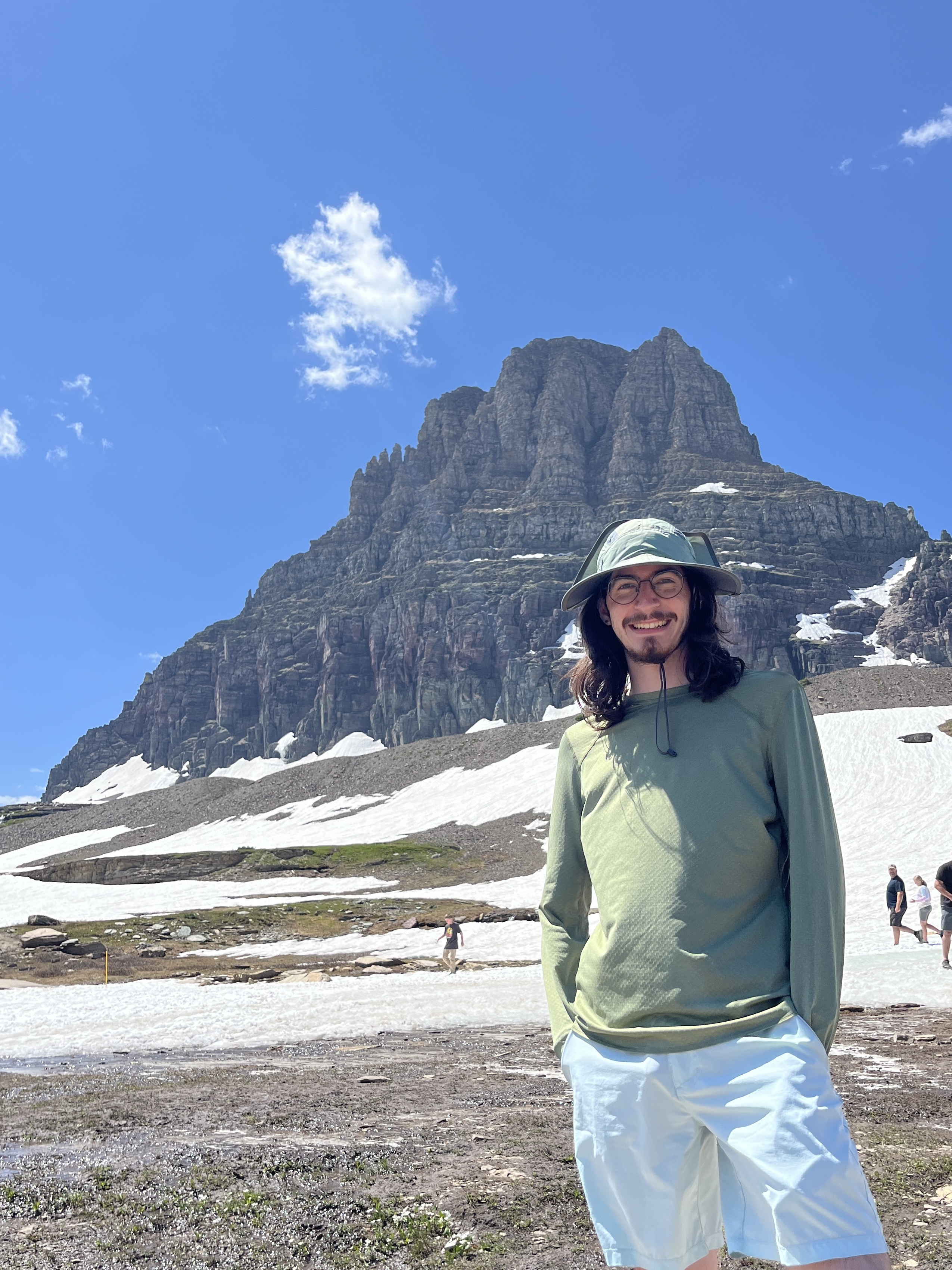
I am a 3rd year PhD candidate at the University of Michigan’s (UM) Climate and Space Science department in Ann Arbor, Michigan.
I work in the Atmospheric and Dynamics Modelling Group at UM and am advised by Dr. Christiane Jablonowski. Currently, I am involved in the NSF StormSPEED project which aims to implement an existing non-hydrostatic spectral element (SE-NH) dynamical core from the Department of Energy (DOE) into NCAR’s Community Earth System Model (CESM) to enable climate modeling for the entire globe at the km-scale. You can see more about my reasearch here.
Research Focus
- High resolution, km-scale climate model development, primarily in the Community Earth System Model (CESM)
- Assessment of convection representation in global circulation models (GCMs) through an idealized modeling hierarchy
- Inequities in the vulnerability to heat extremes and urban heat island effect in Washtenaw County (home to Ann Arbor)
Education:
- Master of Science (MS) in Climate and Space Sciences and Engineering – University of Michigan, Ann Arbor (2024 – 2026)
- Bachelor of Science (BS) in Physics with minors in Math and Astronomy – Cal Poly, San Luis of Obispo (2020-2024)
- Measuring the age of stars with a bayesian statistics approach (manuscript in progress, see poster here)
- Ion-cyclotron waves in the solar corona with Parker Solar Probe Data (senior project with Dr. Kristoff Paulson at the Center for Astrophysics)
Now I use idealized test cases as a computationally efficient tool to probe the representation of convection, which begins to be resolved at the km-scale, in climate models at the km-scale.
Other Interests
Climate models can be difficult to use and their code even harder to decipher. I strive to make modeling more accessible and transparent to the everyday model-user! Moreover, climate science is more than just modeling. At the heart of climate change are issues of environmental justice brought upon by interconnected systems of colonialism, capitalism, and racial supremacy. I am passionate in bridging climate science with the environmental justice issues felt by our communities. At my department I contribute to the organization of non-hierarchal monthly disussions of justice-related topics. Also, I have worked within the Reparative Justice Research Group at the UM Rackham Interdisciplinary Problem Solving Initiative where I researched how historical racial injustices experienced by Black residents within Washtenaw County (home to Ann Arbor) are associated with inequities in the vulnerability to heat extremes today.